For much of my career, I looked at senior living through a hospitality lens. I ran communities the way I’d been trained in a graduate program housed in a hotel school: Anticipate needs, deliver impeccable service, entertain and handle every problem so residents never had to. It felt caring. It looked polished. But it wasn’t enough. And at times, it actually did harm.
Over the past 15 years, my colleagues and I at Christian Living Communities (CLC) have pursued a different path we call the Citizenship Model®. It’s an age-positive, empowerment approach rooted in a simple belief: Every person—at every age and ability—has gifts, passions, talents and experience that make the community stronger. When people see themselves as citizens, not consumers, we unlock influence, meaning, autonomy, belonging and well-being for everyone who calls our communities home—residents, team members, families and even business partners. The results have been profound for culture and for business.
Why Citizenship Matters Now
Traditional senior living, whether institutional or hospitality driven, tends to focus almost exclusively on fulfillment of needs: meals, maintenance, activities, healthcare. Necessary, yes. But community psychologists remind us that a true sense of community also requires membership, influence and shared emotional connection. When we stop at “meeting needs,” we inadvertently sideline older adults from purposeful roles, and we train team members to “do for” rather than “do with.”
Citizenship flips that script. Instead of treating residents as passive recipients of services, we invite and expect contribution, co-creation and shared responsibility. That shift matters for several reasons. First, it counters what The Eden Alternative® calls the three plagues of loneliness, helplessness and boredom that erode quality of life in later years. It replaces a declinist narrative of aging with one of growth, reciprocity, belonging and possibilities. And second, it’s rooted in evidence. No research anywhere that says a life of leisure and being well-served is a path to healthy longevity. In fact, the opposite is true. We need a reason to get up in the morning, to be part of something bigger than ourselves, to truly belong and to challenge ourselves to continue growing.
Background: From Hospitality to Citizenship
One of the turning points in my view of senior living happened far from my workplace. It happened during a hurricane on a resort island. After the storm, the resort did its best to keep us safe: rules, schedules, controlled spaces. Still, I felt a crushing helplessness. When I offered to help, drawing on years of emergency-planning experience, the staff smiled and said, “We’ve got this.” I realized I’d done the same thing to residents countless times, believing I was easing their burden. In truth, I was stripping them of agency.
Boredom set in. Even a simple card game was beyond my ability to focus. What I experienced viscerally was institutionalization: When choices contract, purpose disappears and safety eclipses self-determination.
That experience crystallized something I’d been sensing for years. Hospitality, like the hospital model before it, is a poor fit for a place people call home. Hotels are designed to be a temporary escape from real life; senior living is real life. When we constantly “do for,” we can inadvertently disempower. People thrive on purpose, on being of service to something bigger than themselves.
Hear a full overview of the lessons I learned during the hurricane.
The Citizenship Model Community
At CLC, our Citizenship Model® is built on partnership. We’ve found that asking these two questions of new and prospective residents have incredible ripple effects:
- What gifts, passions and talents will you bring to make our community stronger?
- Who will you become? What do you want to learn? How do you want to grow?
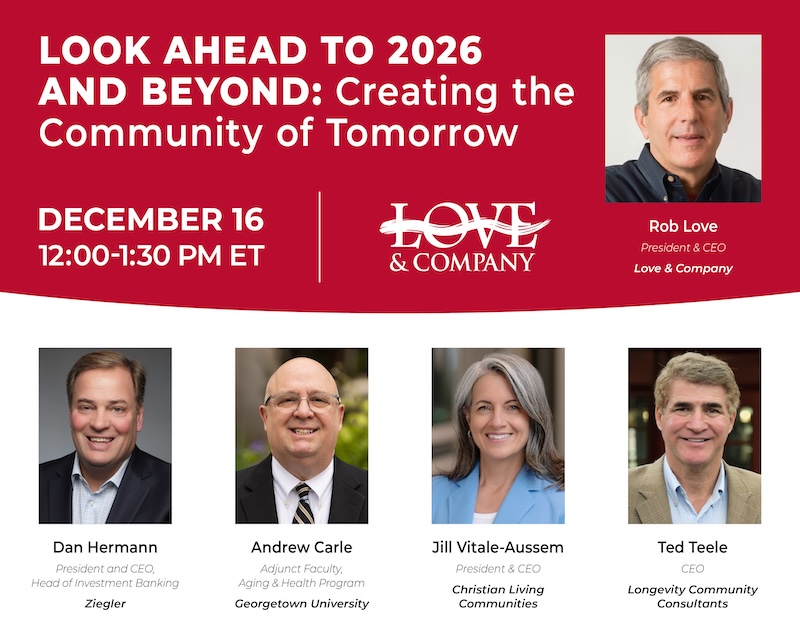
Create the Community of Tomorrow
With 2026 opening unprecedented opportunities for nonprofit growth, now is the time to rethink what the community of the future must be. In our December 16, 2025 webinar, Love & Company President & CEO Rob Love, and a panel of senior living thought leaders discussed how organizations can grow strategically to meet the expectations of tomorrow’s prospects.
The first question shifts identity from “What do I get?” to “How will I contribute?” and reminds us that at every age we have something of value to give back. The second question is intended to shift people from the unfortunate static or declinist view of aging to one of possibilities and growth. Residents don’t just have input—they have influence, real decision-making power and co-ownership of outcomes.
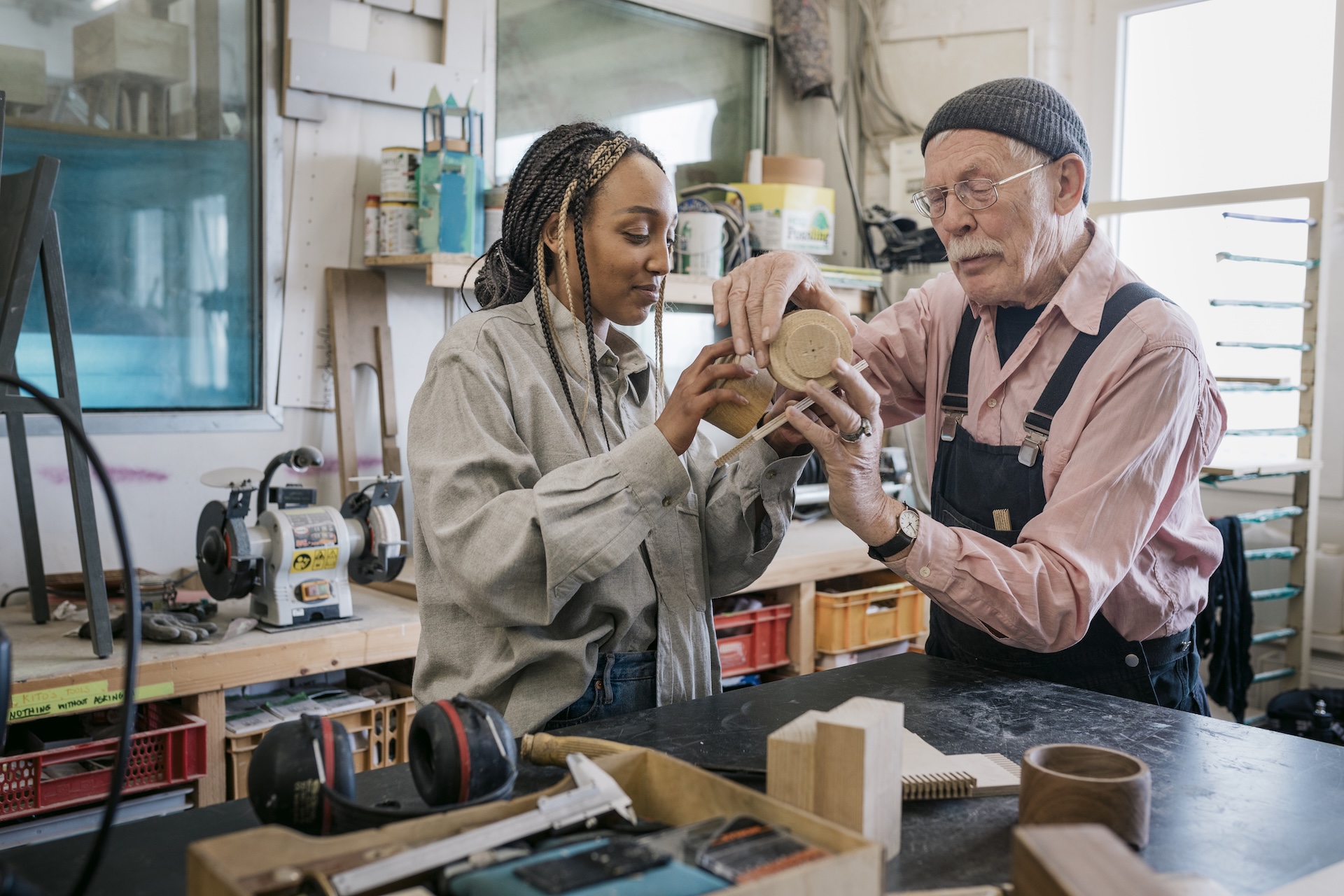
We design for connection. People bring their whole selves to work and to life. A central supply coordinator launches a quilting circle. A maintenance team member who’s a certified trainer may teach safe strength training. I’ve taught art classes. These aren’t “nice extras;” they’reengines of belonging, reciprocity and meaning.
We cultivate community norms that invite inclusion and accountability. Residents set the expectation that everyone belongs—across abilities and living settings. When someone is unkind to a team member or marginalizes a neighbor living with cognitive change, fellow residents, not management, step in to say, “That’s not who we are here.”
We reject surplus safety—the impulse to bubble-wrap life so thoroughly that we suffocate joy and growth. Risk is multidimensional; there’s a downside and an upside. With informed choice, people can pursue meaningful risks—trying a new role, leading a project, starting a club—because a life worth living requires room to stretch.
And we lead for commitment, not compliance. Policies matter, but culture changes when people understand the “why” and choose to act from shared purpose—whether or not a supervisor is watching.
Results and Outcomes at Christian Living Communities
Culture work is incredibly hard. But it works. Where Citizenship has gone deepest across CLC, we see the most compelling resident and organizational outcomes.
- Occupancy & Demand. Our strongest Citizenship communities have sustained 97%–98% occupancy with wait lists, including through the pandemic.
- Team Member Retention & Engagement. In communities that have fully embraced Citizenship, turnover is roughly half the field average.
- Resident Engagement & Meaningful Roles. We’ve moved from “activities” to meaningful impact. Purpose is contagious.
- Satisfaction & Belonging. Resident and team member engagement scores consistently sit much higher than national averages where Citizenship is mature.
- Healthier Social Norms. People understand they not only have rights, but also responsibilities.
These outcomes are the dividends of shared purpose and distributed power—the hard, daily work of community building.
Getting Started: Questions That Change Everything
Real transformation begins with conversation. Back when I was an executive director seeking to create a more inclusive and vibrant campus for all, I learned not to arrive with answers but to lead with questions:
- What kind of community do we want to be? How should people feel here—residents living with different abilities, team members in every role, families, visitors?
- What are we doing now that is getting us to that vision? What are we doing that’s getting in the way?
- What gifts will you contribute? What will you learn next?
- Where have ageist assumptions crept into our thinking and our policies?
- Where are we trading life for the illusion of safety?
Ask these questions widely. Then share power to act on the answers. Expect the work to be messy. Community building is always messy! But the payoff is a culture that is more humane, more resilient and a far more compelling place to live and work.
Reimagine Senior Living
I wrote Disrupting the Status Quo of Senior Living: A Mindshift because I believe our field can do better than polished service and beautiful buildings. Senior living isn’t a temporary vacation from real life. It is real life. And life demands purpose, contribution, relationships and voice.
We strive to deliver exactly that. To replace loneliness, helplessness and boredom with belonging, influence and meaning. To strengthen business outcomes by strengthening human outcomes. Most of all, we strive to honor older adults, and team members, as full citizens whose gifts are essential to the community we create together.
That’s the future of senior living I’m committed to building. I hope you’ll join me.